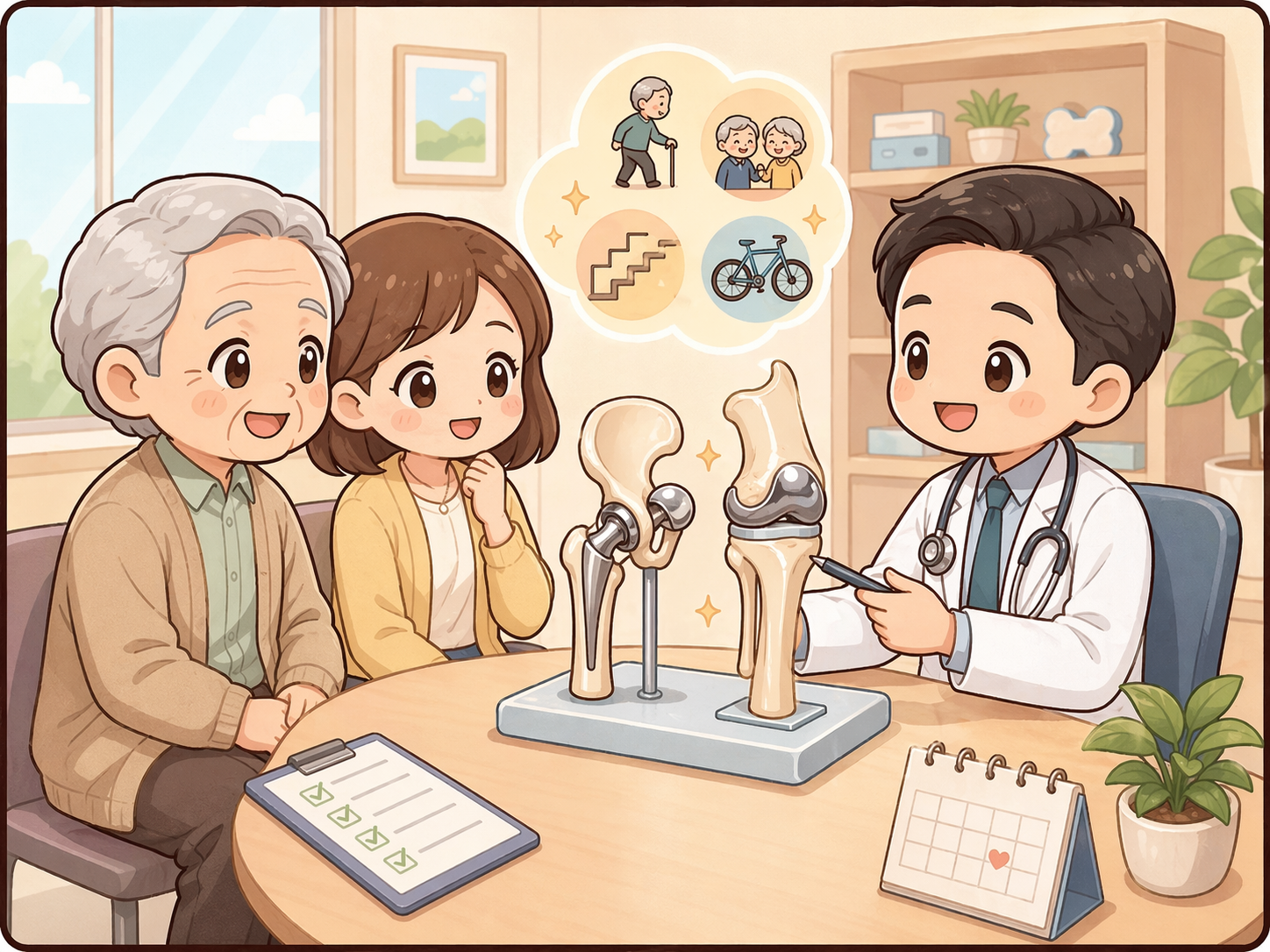
Is it the right time?
Signs it may be time
- • Pain limits walking distance or climbing stairs
- • Sleep is regularly disturbed by joint pain
- • Daily activities are being quietly given up
- • Non-surgical treatments have been tried for months
- • The joint feels unstable or "gives way"
- • You find yourself planning life around the pain
When to wait
- • Pain is still manageable with activity changes
- • You have not yet tried structured physio
- • Weight loss or lifestyle changes may help
- • Other health issues need attention first
- • You cannot commit to the recovery period
- • The decision feels rushed or pressured
Health risks to discuss
- • Uncontrolled diabetes or heart disease
- • Active infection anywhere in the body
- • Severe osteoporosis affecting the bone
- • Blood-thinner medications
- • Smoking — doubles infection risk
- • Obesity — increases complication rates
Before the operation
Pre-op checklist
Medical review
Bring all medications. Blood tests and an ECG may be needed. Tell your surgeon about supplements and herbal remedies.
Dental check
Dental infection increases implant infection risk. Treat any tooth problems 4–6 weeks before surgery.
Home setup
Clear walkways, remove rugs, install night-lights. Arrange a ground-floor bedroom if possible. Stock easy meals.
Help arranged
Someone should stay with you for the first 3–5 days. Arrange transport for follow-up appointments in week 2 and 6.
What happens during surgery
Most joint replacements take 1–2 hours. You will be asleep under general anaesthetic or numb from the waist down with spinal anaesthetic.
Hip replacement
The damaged ball and socket are replaced with metal, ceramic, or plastic parts. The new ball fits into a cup in the pelvis.
Knee replacement
The worn cartilage and bone ends are removed. Metal caps are placed on the femur and tibia, with a plastic insert between them.
You will wake in the recovery room. Most patients are sitting up and eating within hours. Walking with a frame starts the same day or the next morning.
What recovery typically looks like
In hospital
- • Pain managed with medication
- • First steps with a walker or frame
- • Physio teaches bed exercises
- • Wound checked daily
- • Discharge planning begins
Home recovery
- • Short walks every 2–3 hours
- • Swelling peaks around day 5
- • Daily exercises from physio sheet
- • Sleep often broken — normal
- • Helper cooks and cleans
Gaining independence
- • Walking further, often without aid
- • Driving short distances possible
- • Pain medication drops to occasional
- • Return to light housework
- • Outpatient physio continues
Back to life
- • Shopping, swimming, social outings
- • Joint keeps improving to 12 months
- • Regular walks maintain the result
- • Annual check-ups recommended
- • Most implants last 15–20 years