What patients usually need to know first about arthritis.
Arthritis simply means a joint is inflamed or worn. The two most common types — osteoarthritis and inflammatory arthritis — feel different, progress differently, and need different management.
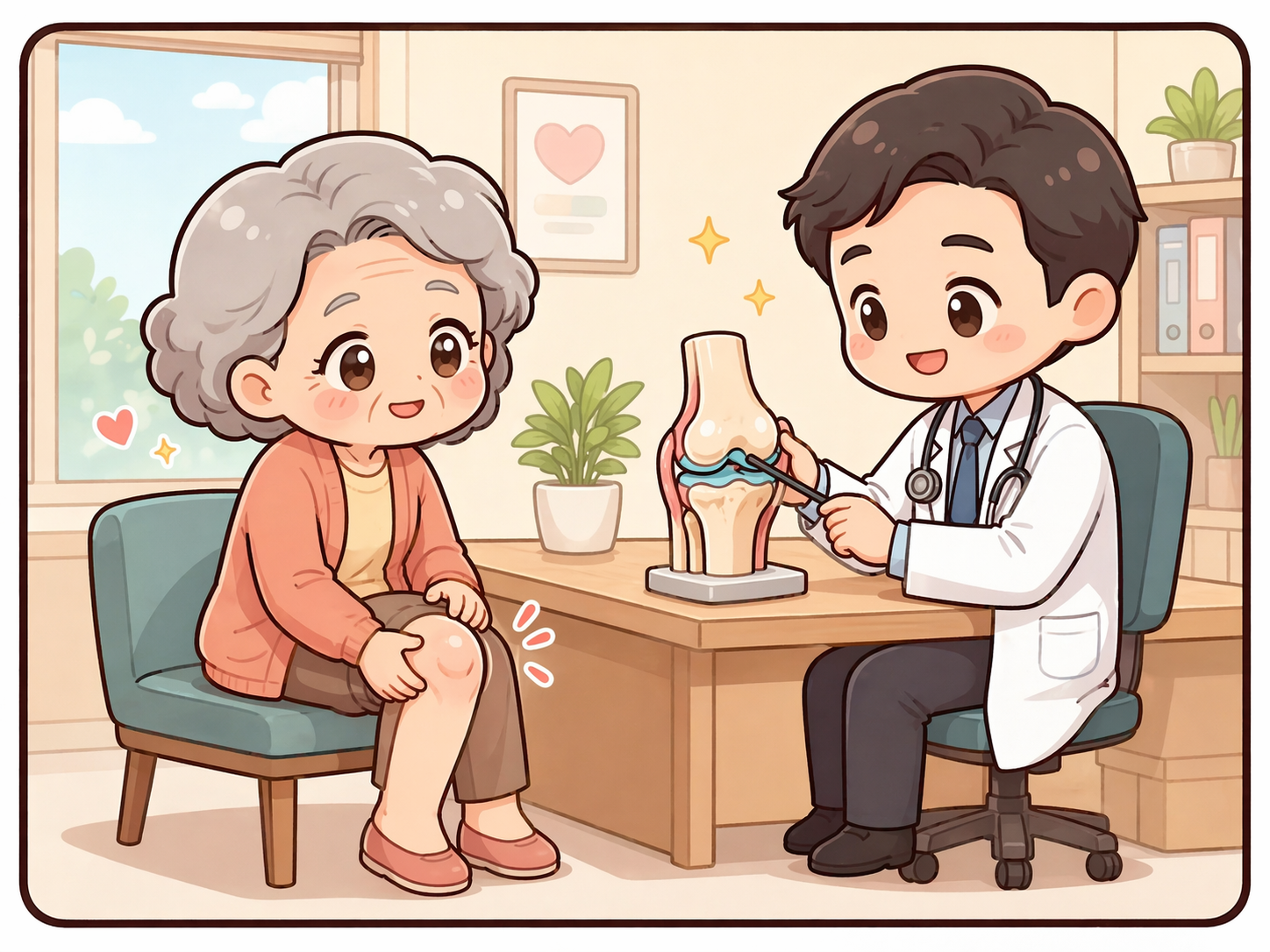
Osteoarthritis vs. inflammatory arthritis
Osteoarthritis (wear and tear)
The cartilage that cushions the joint gradually thins. Bone rubs on bone. It usually develops slowly over years and is more common in people over 60, but it can start in your 40s or 50s.
- Pain that gets worse with activity and eases with rest
- Morning stiffness that lasts under 30 minutes
- Clicking or grinding feeling in the joint
- Often affects knees, hips, spine, and hands
- May run in families or follow an old injury
Inflammatory arthritis
The immune system attacks the joint lining. This causes warmth, swelling, and prolonged stiffness. It can appear at any age and may affect multiple joints at once, often symmetrically.
- Swelling and warmth around the joint
- Morning stiffness lasting more than 45 minutes
- Symmetry — both knees or both hands affected
- General fatigue and low-grade fever possible
- Needs early specialist treatment to protect joints
What to watch for
Pain patterns
- • Worse after sitting, climbing stairs, or standing for long
- • Better with gentle movement or a warm shower
- • Often comes and goes at first, then becomes more constant
- • May disturb sleep if the joint is under pressure
- • Weather changes can make it feel worse for some people
Physical changes
- • Swelling that doesn't go down after a day or two
- • Reduced range — difficulty bending or straightening
- • Clicking, grinding, or the joint "giving way"
- • Visible bony enlargement in finger joints
- • A slight limp or favouring one side when walking
Do not wait
- • A hot, red, rapidly swollen joint
- • Fever with joint pain
- • Sudden inability to bear weight
- • New numbness or weakness in the leg
- • Joint pain after a fall or injury
- • A joint that looks deformed after a twist
What the doctor will ask and check
Four parts of the visit
History
When pain started, what makes it better or worse, past injuries, family history, and medications. Bring a list of everything you take.
Examination
Movement, swelling, warmth, alignment, gait, and stability of the joint. The doctor may compare both sides.
Imaging
X-rays first. MRI or ultrasound only when the question needs it. Not everyone needs a scan on the first visit.
Tests
Blood work or joint fluid analysis when inflammation, gout, or infection is suspected. Results usually take a few days.
Daily habits that help most
Keep moving gently
Walking, swimming, and stationary cycling protect cartilage. Resting completely usually makes stiffness worse. Aim for 20–30 minutes daily.
Strengthen the muscles around the joint
Strong quadriceps reduce knee pain. A physio can teach safe exercises in 1–2 sessions. Resistance bands are inexpensive and effective.
Footwear and pacing
Cushioned soles with arch support help. Break long tasks into chunks. Avoid standing still for more than 20 minutes.
Weight and sleep
Every 5 kg of weight loss reduces knee pressure by 20 kg per step. Good sleep lowers inflammation markers. Both matter enormously.
Common misunderstandings
MYTH
"Arthritis is just part of getting old — nothing can be done."
While osteoarthritis becomes more common with age, it is not inevitable. Exercise, weight management, and appropriate treatment can slow progression and reduce pain significantly. Many people over 70 live with mild or well-controlled arthritis.
MYTH
"Resting the joint as much as possible is best."
Complete rest weakens the muscles that support the joint, which usually increases pain. Gentle, regular movement keeps joints lubricated and muscles strong. The key is finding the right type and amount of activity.
MYTH
"All joint pain means I will eventually need surgery."
Most people with arthritis never need joint replacement. Surgery is usually considered only when pain severely limits daily life and other treatments have been tried. Many patients manage well for years with exercise, medication, and lifestyle changes.
MYTH
"Cracking knuckles causes arthritis."
There is no good evidence that knuckle-cracking causes arthritis. The sound comes from bubbles popping in the joint fluid. Habitual cracking does not wear down cartilage.